Why learn Gulf Arabic?
It is the mother tongue of Gulf Arabs and a prestige Arabic dialect. It is the living language you can hear in everyday conversations, local TV / radio talk shows, movies, music and business settings across the Gulf region.
If you want to learn Arabic for use in the Gulf countries, then Gulf Arabic (also called Khaleeji) is the most appropriate choice.

It is the Arabic language variant spoken by the locals of the United Arab Emirates (Dubai, Abu Dhabi, Sharjah, etc.), Qatar, Kuwait, Bahrain, parts of eastern Saudi Arabia, most of Southern Iraq and, to a lesser extent, Oman.
It is the mother tongue of Gulf Arabs and a prestige Arabic dialect. It is the living language you can hear in everyday conversations, local TV / radio talk shows, movies, music and business settings across the Gulf region.
By choosing to learn Arabic with the GulfArabic online course, you'll develop practical communication skills that you can use right away in real-life situations. We have designed our learning platform for those of you who want to learn Arabic that's actually spoken, with loads of everyday and business-related vocabulary and all the grammar you need to start expressing your thoughts by forming your own sentences. There's audio for every Arabic word or sentence, as well as quizzes to test your knowledge.
Throughout the years, GulfArabic.com has been mentioned, discussed and recommended by a variety of media outlets as well as university professors.




We take pride in having among our numerous clients such notable examples as Standard Chartered Bank UAE and a renowned CNN presenter, as well as having contributed to the production of this amazing video about Dubai.
Modern Standard Arabic (MSA in short, or fuS-Ha فصحى in Arabic) is the language of news journalism (not so much talk shows which are usually in a dialect), colleges, diplomacy - it's a high-level variant of Arabic used in formal writing and news broadcasts, which is to a very large degree different from the spoken language both in terms of grammar and vocabulary. If you're interested in that, we cannot help you - there are a gazillion sites teaching that.
If you're interested in reading the Holy Qur'an, jaza'ak Allah khayr, may Allah reward your efforts, but we cannot help you. It's not what we specialize in.
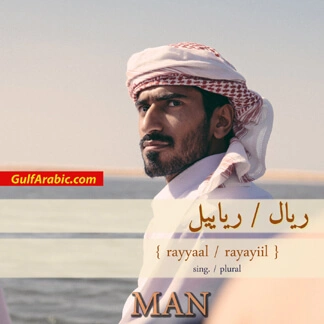
The mother tongue of Arabs is a dialect. For Egyptians, it's Egyptian Arabic (Masri), for Syrians it's Shami (Syrian, or Levantine) Arabic. For Gulf Arabs it's Gulf Arabic (Khaleeji Arabic). That's the Arabic language of everyday life, of most practical business communication, of radio and TV talk shows and series, and as you can >> see here << it's used at Government Summits as well.
So, what's more valuable, Modern Standard Arabic or Gulf Arabic?
It depends on your needs.
Are you interested in high-level political negotiations, watching the news, and history dramas, etc.? Then you need Modern Standard Arabic.
Do you want to actually talk to your colleagues, perhaps make a few friends, basically talk to people in everyday layman's terms? Then you need to learn Arabic as it's spoken in the Gulf.
As you might imagine we receive many emails. Some of them are from people who by the way they wrote their emails, you could be sure, they still think you can go out on the street and use Modern Standard Arabic (MSA) conversationally.
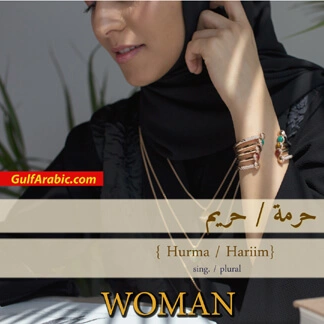
You could try that and, yes, in all likelihood, people will understand you but you will not understand them since few Arabs speak like that (like the TV news announcer, like a high-ranking Arab League official, like a documentary narrator). Most people will be polite and outwardly impressed by your knowledge of MSA; some might ask you 'Why do you speak like the TV?'
Arab people speak, in 90% (if not more) of their waking lives, their mother tongues, and those are the dialects (lahjaat لهجات). Since you ended up on our site, you must be either in the Gulf or planning to move to the Gulf or maybe you have Gulf Arab friends. To use a quote attributed to Nelson Mandela:
"If you talk to a man in a language he understands (Arabs understand Modern Standard Arabic, of course), that goes to his head. If you talk to him in his language (Gulf Arabic for Gulf Arabs), that goes to his heart."
attributed to Nelson Mandela
Setting out to learn Arabic as spoken in the Gulf countries, may evoke memories of past attempts at learning a foreign language, be it in high school or college, with all the ensuing tedious memorization of words, and phrases, and grammar rules. This coupled with the notion that Arabic is a very difficult language won't do you any good in your progress with this beginners' course. For many, it appears that the results of studying a foreign language are not worth all the effort, and they soon abandon their dream of becoming more proficient.
It is very important to know how to go about studying a language, especially one that is quite different from English (or any other European language), such as Arabic. Every student has a different way of learning just as different professors have different ways of teaching. Nevertheless, there are a few rules of thumb one has to keep in mind when setting out to learn Arabic: